
You need to login in order to like this post: click here
By Philip Matogo
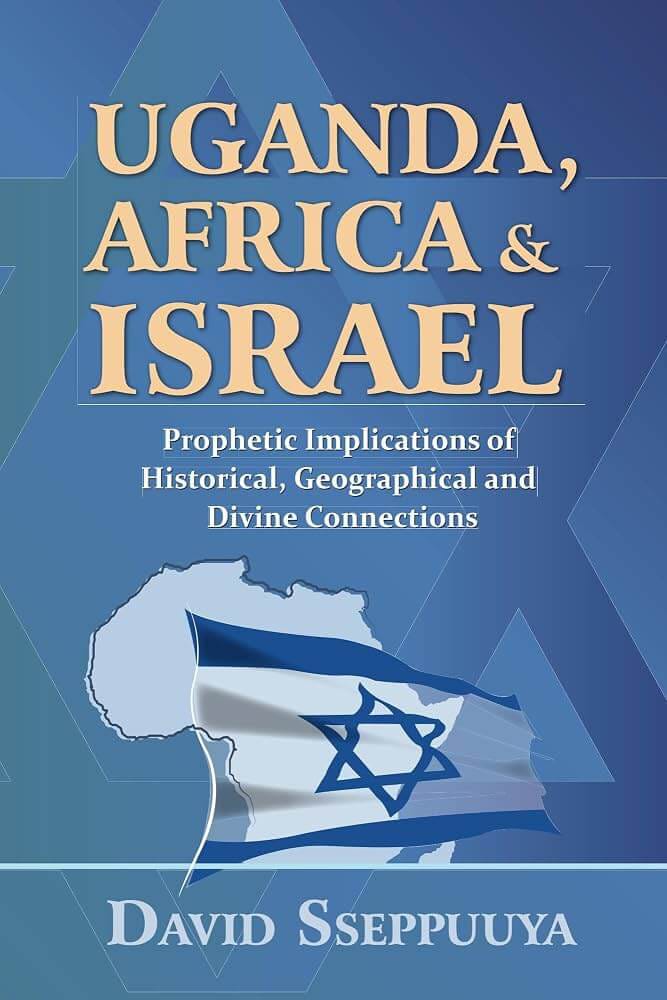
Veteran Ugandan journalist and editor David Sseppuya published Uganda, Africa and Israel: Prophetic Implications of Historical, Geographical and Divine Connections in 2017.
The book makes for compelling reading. It is thoughtful, highly readable and ambitious in the connections it attempts to make.
Before we sink our literary fangs into its meaning, however, there are a few prophecies on the literary grapevine worth considering.
Revelation, Rome and the Seven Hills
In the Book of Revelation, specifically Chapter 17, the Antichrist is described through a symbolic vision involving a beast, a woman riding it, seven hills and an eighth king.
In ancient history and geography, Rome is famously known as the “city of seven hills.” Because of this, many early and modern readers have connected the passage to Rome.
Revelation 17:11 states:
“The beast who once was, and now is not, is an eighth king. He belongs to the seven and is going to his destruction.”
Many modern prophecy teachers and Christian traditions believe this passage points to a future end-times world leader.
According to this interpretation, the Antichrist will emerge through a global system connected in some way to Rome.
Other biblical scholars approach the passage differently.
They believe the “seven hills” refer symbolically to the Roman Empire and its rulers, particularly in relation to the persecution of early Christians during the first century AD.
A Ugandan Conspiracy Theory?
Some biblical scholars and prophecy enthusiasts in Uganda have taken a different view.
They believe the Antichrist could come from Uganda.
The theory is partly linked to Kampala.
Kampala was historically associated with seven major hills that helped define its early layout and identity.
Although the modern capital has expanded far beyond those original areas, the description of Kampala as the “City of Seven Hills” remains widely known.
The seven hills commonly mentioned in this interpretation are:
Old Kampala Hill — site of the Gaddafi National Mosque
Mengo Hill — seat of the Buganda Kingdom Palace
Namirembe Hill — home to St. Paul’s Anglican Cathedral
Rubaga Hill — home to St. Mary’s Catholic Cathedral
Kibuli Hill — site of the historic Kibuli Mosque
Makerere Hill — home to Makerere University
Mulago Hill — site of Mulago National Referral Hospital
These hills represent religious, cultural, educational and political landmarks.
From there, the conspiracy theory moves from geography to political history.
The Eighth King Theory
Uganda inherited a centralized bureaucratic system that was shaped in part by British colonial rule.
Within that structure, Uganda’s presidents have often exercised enormous constitutional and political authority.
This has led some conspiracy theorists to compare presidents symbolically to kings.
From there, they attempt to connect Uganda’s political succession with the “eighth king” mentioned in Revelation.
Uganda has had the following leaders since independence:
Edward Mutesa II — 1963–1966
Milton Obote — 1966–1971 and 1980–1985
Idi Amin — 1971–1979
Yusuf Lule — 1979
Godfrey Binaisa — 1979–1980
Paulo Muwanga — 1980, as Chairman of the Military Commission and de facto head of state
Tito Okello — 1985–1986
Yoweri Museveni — 1986–present
Because Milton Obote returned to power for a second period, conspiracy theorists sometimes count the sequence in different ways.
This is how the theory attempts to connect Uganda to the symbolism of seven and eight in Revelation.
However, the interpretation remains speculative.
It is within this atmosphere of prophecy, geography and historical symbolism that David Sseppuya’s work becomes especially interesting.
Sseppuya’s Take
In Uganda, Africa and Israel: Prophetic Implications of Historical, Geographical and Divine Connections, Sseppuya examines whether modern Israel and the Jewish people maintain a direct connection to biblical narratives.
He also explores what he understands to be God’s purpose for Israel as a “first-born nation.”
At the same time, the book asks an equally important question.
What role do African nations play, both historically and in the present, in relation to Israel and its destiny?
Sseppuya brings together a wide range of historical, geographical and biblical references.
These include biblical Goshen, the 1976 Entebbe raid, the Prime Meridian, the Nile Delta and regions such as Uasin-Gishu.
His aim is to search for deeper meaning behind seemingly unrelated events and places.
The author blends contemporary geopolitics, world history, physical geography and biblical scripture.
Through these connections, he invites readers to look beyond conventional political narratives.
Instead, he asks them to consider global events through a prophetic lens.
Prophecies Over Uganda & Africa
Sseppuya develops this vision further in Prophecies Over Uganda & Africa: A Compilation.
In this companion work, he presents a far more hopeful picture of Uganda than the conspiracy theories surrounding the Beast.
On page 69, he writes that God has not forgotten Africa.
He argues that Africa matters to God and that there are good plans for the continent.
According to Sseppuya, these plans will be fulfilled through a consistent movement of prayer across Africa.
He envisions a network of dedicated men and women of God from different spheres of life.
Through prayer, he believes Africa can experience spiritual renewal and transformation.
A Continental Prayer Altar
Sseppuya also calls for what he describes as a Continental Prayer Altar.
This altar would be dedicated to Africa’s destiny and what he calls the continent’s divine redemptive purposes.
He links this vision to Isaiah 19:19.
According to his account, the Africa Altar was launched in Kampala, Uganda, on 30 September 2022.
It continues to be serviced weekly.
An annual Africa Altar Convention has also taken place since then.
The message behind the initiative is simple:
“The time for Africa is now.”
Uganda’s Special Mission
Uganda occupies a central place in Sseppuya’s prophetic vision.
He believes the country has a vital role to play in Africa’s spiritual restoration.
According to him, Uganda is called to become an “altar nation.”
In this role, Uganda would become a centre of continuous priestly and travailing prayer for the continent.
Sseppuya believes Uganda will help lead other African nations in redemptive intercession.
He further argues that Uganda will kindle the Great Lakes Region.
From there, he believes the spiritual influence will spread across Africa.
Eventually, that influence could extend beyond the continent.
A Spiritual Fountain for the Nations
Sseppuya also writes that Uganda will become recognised as a spiritual fountain for other nations.
He believes people from across Africa will travel to Uganda seeking spiritual renewal and direction.
In his prophetic vision, they will then return to their own countries carrying the same spiritual fire.
This influence, he argues, will not remain limited to religion.
Sseppuya predicts that national leaders will also come to Uganda seeking wisdom, guidance and support.
Uganda, in his view, will become a pacesetter, model and voice for other African nations.
He sees the country becoming increasingly prominent for this purpose.
He also expects more positive news about Uganda to be published and shared internationally.
Uganda, Africa and Israel
The strength of Sseppuya’s work lies in the scale of the connections he attempts to make.
He brings together Uganda, Africa and Israel alongside biblical prophecy, history, geography and contemporary events.
Whether every reader agrees with his prophetic conclusions is another matter.
Yet the books raise a fascinating question.
Could Uganda have a larger spiritual role in Africa than many people imagine?
Against darker conspiracy theories that attempt to connect Uganda with Revelation’s Beast, Sseppuya offers a very different vision.
In his interpretation, Uganda is not presented as a source of destruction.
Instead, it becomes a potential centre of prayer, spiritual renewal and continental transformation.
You need to login in order to like this post: click here