You need to login in order to like this post: click here
By Davis Ndyomugabe of Qachecks
What can a name tell us about the circumstances into which a person was born? In Roll Call of Rukiga Names!, Davis Ndyomugabe of Qachecks reflects on the richness of traditional Rukiga names and the stories carried within them. Some speak of joy and survival. Others recall hardship, courage, betrayal, death, hope or the circumstances surrounding a child’s arrival. Together, they show how a name can become more than an identity. It can become a record of family history, memory and culture.
There is something deeply satisfying about our original Rukiga names.
Their vowels carry rhythm, meaning and effect. Sometimes, the sound of a name seems inseparable from the story behind it.
For a person whose mother tongue is Rukiga, the birth and naming of a child can become a celebration of language itself.
A name seems to fall from heaven as light pours from the sun. Its meaning brings warmth, memory and reflection.
Many of our names carry intentions. They may tell us something about the circumstances surrounding a child’s conception or birth. They may speak about what happened, when it happened or what the family was experiencing at the time.
Even today, I continue to discover names I had never heard before.
Yet, immediately after hearing some of them pronounced, their meanings seem to ring bells in my mind. The circumstances surrounding conception, birth and family life suddenly appear before me.
It can almost feel as though I were there to witness them.
Consider a name such as Baryanengobya, Baryanengwe, Ndyanabangi, Ndyanabo or Nshekanabo.
Such names may speak to difficult relationships surrounding the child’s parents. Perhaps neighbours, relatives or friends betrayed them. The name then becomes a reminder of those circumstances.
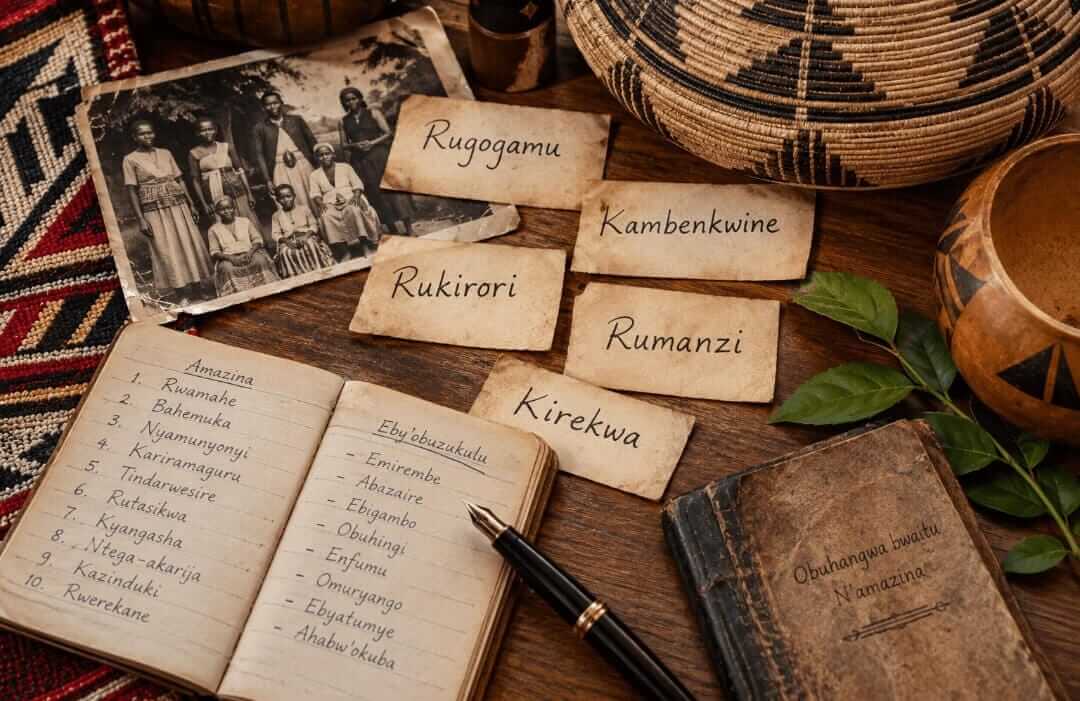
A name such as Rugogamu carries a different spirit.
It may evoke heroic deeds, triumphant moments or a narrow escape from danger. It brings to mind someone surviving spears, arrows and swords through courage and determination.
Then there is Kambenkwine.
The name may suggest mixed hopes. Perhaps the child arrived after others had unfortunately failed to survive.
It brings to mind my grandfather, Katookwa—sprouting.
The feeling is almost:
Let me have you for now. Who knows what tomorrow will bring?
Rukiroru or Rukirori may suggest that this season is better than the previous one.
The past was difficult.
This time, however, there is hope.
Names such as Bagambisa and Bahemuka can carry another message.
Perhaps there were people who said something would never happen. Maybe there were doubters, enemies or relatives who wished otherwise.
Yet it happened.
The child arrived.
In that sense, Bahemuka refers not to the child but to those who doubted.
It reminds me of the recent blazing hymn:
“Yesu Ku areije,
Owakigambire araza kukyehakana!
Owakigambire araza kukyehakana…”
The message is powerful.
Hatred, dislike and bad wishes have no room in the temple of favour. Those who doubted are left ashamed because what they said would never happen has happened.
Then we have names such as Basheija, Kansheija, Kasheija, Musheija, Rwansheija, Kyojo and Omwojo.
These names celebrate the male child. They can speak to character, identity and masculinity.
For girls and women, we encounter names such as Kikazi, Nkazi, Muhara, Kigatire, Kyangasha, Nyamutaringurwa, Kyenda, Keirashanirwa, Kageiga, Kamashabo and Nyamunyonyi.
These names carry their own expressions of femininity, resilience, character and honour.
Some names, however, carry painful memories.
Kirekwa may recall a child whose mother died during childbirth or shortly afterwards.
Murekwa carries a similar association, although it is not commonly used in Kigezi. In Bugisu, related forms include Mulekhwa and Mulekwa.
Other names appear to speak directly to uncertainty.
Ntega-akarija carries the feeling of waiting upon fate or fortune.
The child has arrived, but the future remains uncertain.
For now, I have received you.
For now, I am your keeper.
This feeling can also be heard in Katarikawe.
Kariramaguru speaks to preparation.
Life is full of surprises. Therefore, one must always be ready. You cannot simply sit and relax in a world of shocks and uncertainty.
Even while doing one thing, you must be prepared for the next move, step or direction.
Names such as Karambuzi, Rutandekire, Runkuratire, Rukanga, Rukanyangira, Ruzibiza, Timarwa, Tiragana, Tindarwesire and Zikanga also seem to recognise life’s temporary nature.
A child is here today.
Like those who came before, that child will one day leave.
For now, however, the family waits to see how long life will last.
Death was not invited.
Yet death remains part of the human condition.
Female names carrying related sentiments include Tigahwa, Tibahwamasiko, Tihdeitumire and Tabwirukiro.
To understand some of these names, we must also remember the world in which earlier generations lived.
In the old days, death could be brutal and unpredictable.
Disease, hunger and adversity were widespread. Literacy was limited, while ignorance, taboos and unquestioned traditions sometimes made difficult circumstances even worse.
Think about diseases such as measles and the danger they once represented.
In such a world, the survival of a child could never be taken for granted.
Perhaps that helps us understand names such as Ndyanabo, Ndyanabangi, Nshekanabo, Baryanengobya, Baryanengwe, Ndijanabo, Kambenkwine, Zinkuratire, Bizimu, Bifwabusha, Tamutambo, Kaahwa, Tishekwa, Bafwokworoora, Nkirirahe, Bagorogoza, Nagizi, Ndindirire and Bahirima.
They suggest a world in which people lived with uncertainty yet continued surviving one day at a time.
Other parents appear to have named their children almost as though they were negotiating with death, fate or adversity.
Consider Ndagano, Bifubyeka, Rwamburabuza, Kindemire, Karemire, Mushwaza, Rutangura and Bubikire.
Then there are names filled with courage.
Some carry heroism, valour, strength and resilience. You hear them and immediately sense defiance and determination.
Among them are Biganjabikwatentare, Rwatangabo, Murwani, Rwamahe, Muteikarirwa, Mutekanga, Rumanzi, Rumanyika, Rugazoora, Rugasira, Ruteiruka, Rumashwa, Rubagyema, Kifuba, Rugogamu, Rutasikwa, Kajoogi, Mwambusya, Rujoojo, Kajoojo, Rujoki, Nkubito, Katerere, Nziguka, Rwebishaka, Rwakabunde, Rwehobuganzi, Bazira, Mutambuka, Mutahunga, Karashani, Byaruhambana, Rwentare, Mutegaya, Bantu and Rwigi.
Their sounds seem to carry courage of their own.
Other names look back at hardship and ask a simple question:
How did we survive?
People persisted.
They persevered.
Even when they had almost nothing, they somehow made it.
Names such as Bitariho, Bariyo, Baryamujura, Bitwire and Kirarira can bring such circumstances to mind.
Other lives were cut painfully short.
They were like chicks nipped in the bud before they had the chance to grow.
Names associated with such memories include Kyanira, Murirabusha, Batoryo, Kihungu, Kiteruzi, Rushanda and Kamurasi.
Still, the roll call continues.
Some names appear connected to spiritual belief or divine forces. Among them are Kemandwa, Kanyonza, Byara and Kazinduki.
And then we encounter their brother, Rwerekane.
The more we listen to these names, the clearer something becomes.
A traditional name is not merely something by which a person is called.
It can carry a story.
It can preserve a struggle.
It can celebrate survival.
It can remember grief.
It can answer enemies.
It can express hope.
It can honour courage.
Above all, it can preserve a piece of the world into which a child was born.
That is why these names deserve conversation, documentation and remembrance.
Let us talk about them together.
After all, we have all travelled from somewhere.
We are all, in one way or another, Banyamwegyendaho!
And irrespective of our present stations in life, aren’t all of us really Barugahare?
An addendum to my earlier script on Kigezi names.
— Davis Ndyomugabe of Qachecks
You need to login in order to like this post: click here