
By Timothy Kirenda
Some losses leave a nation searching for answers. In “The Son of Gongodyo (SOG),” Timothy Kirenda pays tribute to Ugandan rugby player Sydney Gongodyo, reflecting on his sporting legacy, his family and the shock surrounding his reported death in June 2026.
Written with grief, anger and admiration, this memorial explores the fragility of life and the painful truth that every person leaves behind a place no one else can fill.
Mid-year 2026. A time when all have mastered New Year routines, mastered New Year expectations and generally handled a great deal. January all the way to June; six months in is something, a journey travelled, nothing to complain about.
Deep in a rugged East African city, a broad-daylight disaster. Falling like darkness in the light. Nothing we had heard of or ever seen at this level. The corporate level. The ones who wear white collars. The corporate Ugandans.
We all know each other; we all carry respect with respectable brands.
June the 5th. News breaks of Gongodyo’s death.
Gongodyo Sydney, prominently starred with the Black Pirates, proudly sponsored by Stanbic Bank. Also a feature on the national squad, the Rugby Cranes.
Many heads in the city are stunned by the news. Many mouths are mumbling. The “why” and the “how come” go around speedily.
It’s a story evidenced by imagery and videography, and indeed, the sights are jaw-dropping, insensible, heavily regrettable and nothing pretty.
Sydney Gongodyo, 27 years old. An accomplished, high-ranking man. Fully accomplished, if you may.
A father to a son and a son to a father.
His wife, so beautiful, and his heart for the nation, a radical statesman.
The type you never find. They come one in every hundred.
They who put their bodies on the line. Not in a world war, but in a fight for pride.
Gongodyo was one of those.
A rare breed of Ugandan men.
Well known around town. Some call them “Budonians”; some call them “Ngonians”. Well respected and, in some corners, very well feared.
Questions all over and questions forever about possibly what went wrong or who went wrong.
The Gongodyo murder.
One that sends shivers down your spine.
The ruthlessness and animosity of Africa and Africans.
He was beaten like a piece of meat that a bunch of cannibals were about to feed on for a week. Targeting his head so as to feed on the rest of his flesh.
Yes, cannibals is what they looked like, for there was not a single human element in them.
Those “Kampala rascals”, dimwits of civilisation.
They hang on the streets like mad dogs, waiting to devour what’s good.
They got the son.
THE SON OF GONGODYO.
The rascals killed him. Maybe wanted to eat him.
Gone too soon is what we were left to say; it’s what we have learned.
But gone forever is what we don’t say.
For human beings are not replaceable.
There are no replicas, there are no duplicates, there are no retail shops.
There will never be another.
SYDNEY GONGODYO.
A completed task.
The academician would call him a “marking guide”.
A man faultless and sure, with nothing to lose and nothing to hide.
THE SON OF GONGODYO.
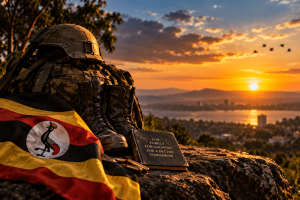





Sydney’s death was brutal, and I’m glad this piece refuses to soften it. The tribute is raw, angry and deeply human, honouring a husband and father taken at just 27.
At 27, life is only beginning; his had just started. The world needs to know that people are not replaceable. There will never be another Sydney Gongodyo. Rest well, son of Gongodyo.
Powerful tribute, Timothy. Sydney Gongodyo’s story was truely sad and hard to swallow, and your words capture both the pride he carried for his country and the grief his loss left behind. The line about human beings not being replaceable has stayed with me. Thank you for writing this.
A good piece speaking the true emotions about that incident
Indeed!!!
Humbling feature @fasihimag