You need to login in order to like this post: click here
By Fasihi Magazine
What happens when poetry moves beyond the classroom and becomes a space where young people can speak about their lives?
For Ugandan visual poet and communication specialist Ritah Elit, poetry has the potential to do far more than help students pass literature examinations. It can strengthen literacy, build confidence, encourage self-expression and give young people a language for confronting some of the emotional pressures they experience.
Through RIEL Communications Limited and BYTE THE MIC, Elit is working to bring expressive arts into conversations around youth mental health and digital well-being. In this conversation with Fasihi Magazine, she discusses poetry in schools, its role in literacy and emotional expression, the vision behind BYTE THE MIC, and what she hopes to see in the future of Uganda’s creative industry.
Q1: How deeply are schools embedded in poetry as a discipline or subject? How interested in poetry are students?
Traditionally, poetry in many schools has been confined to the academic environment. Students often encounter it as something they have to study, interpret and reproduce for examinations.
However, the response changes when poetry moves from the page to the stage.
When students are introduced to performance poetry and spoken word, their interest grows significantly. They begin to see poetry not simply as something they have to memorise or analyse for marks, but as a way of expressing their own experiences.
Young people are hungry for platforms where they can speak about their realities in their own voices. When we create those spaces, poetry becomes personal, relevant and exciting.
Q2: What do you think literature, and poetry in particular, can do to improve literacy in the country?
Poetry has a unique ability to turn complex ideas into language and stories that people can connect with.
Through rhythm, imagery, storytelling and wordplay, young people encounter new vocabulary almost naturally. At the same time, they learn how to interpret meaning, question ideas and communicate their own thoughts more effectively.
That contributes to literacy beyond simply being able to read and write.
Poetry can develop critical thinking, confidence and communication skills. When young people become comfortable using language creatively and meaningfully, we strengthen the wider communication culture of the country.
Q3: Would you say that poetry is therapeutic and could help students tackle emotional issues?
Absolutely.
Spoken word can become an emotional release for young people who may struggle to explain what they are experiencing in ordinary conversation.
Students today are navigating many pressures, including academic stress, peer pressure and the emotional effects of social media and the digital world.
Poetry gives them another vocabulary through which they can process those experiences.
A young person may find it difficult to sit down and directly explain fear, loneliness, anxiety or frustration. Yet that same person may be able to put those feelings into a poem.
When given the right environment and support, creative expression can help bring silent struggles into the open and turn difficult experiences into meaningful art.
Q4: Tell us more about BYTE THE MIC. What are your expectations, and what do you hope to achieve?
BYTE THE MIC is an inter-school expressive arts movement focused on youth mental health and digital well-being.
Our vision is to use the voices of young people themselves to start conversations about the challenges they face.
We expect to reach more than 1,600 young people across over 20 schools. However, the goal goes beyond numbers.
We want students to lead meaningful peer-to-peer conversations about mental health, responsible engagement with the digital world and the realities affecting young people today.
Ultimately, we hope to build sustainable student networks where young people can support one another, express themselves creatively and become advocates for healthier school communities.
Q5: What are your future plans for poetry and literature in Uganda?
We want to contribute to a future where creative work is recognised not only for its cultural value but also as a viable industry.
One part of that vision is developing stronger and more structured partnerships with schools. This can create opportunities for young writers, poets and performers while allowing students to engage with literature beyond the traditional classroom setting.
We also want to expand our flagship broadcast series, THE VOICE OF PURPOSE & IMPACT, as another platform for meaningful stories and creative voices.
The bigger goal is to help build an ecosystem where poetry and literature can educate, inspire, create opportunities and contribute to the growth of Uganda’s creative economy.
About Ritah Elit
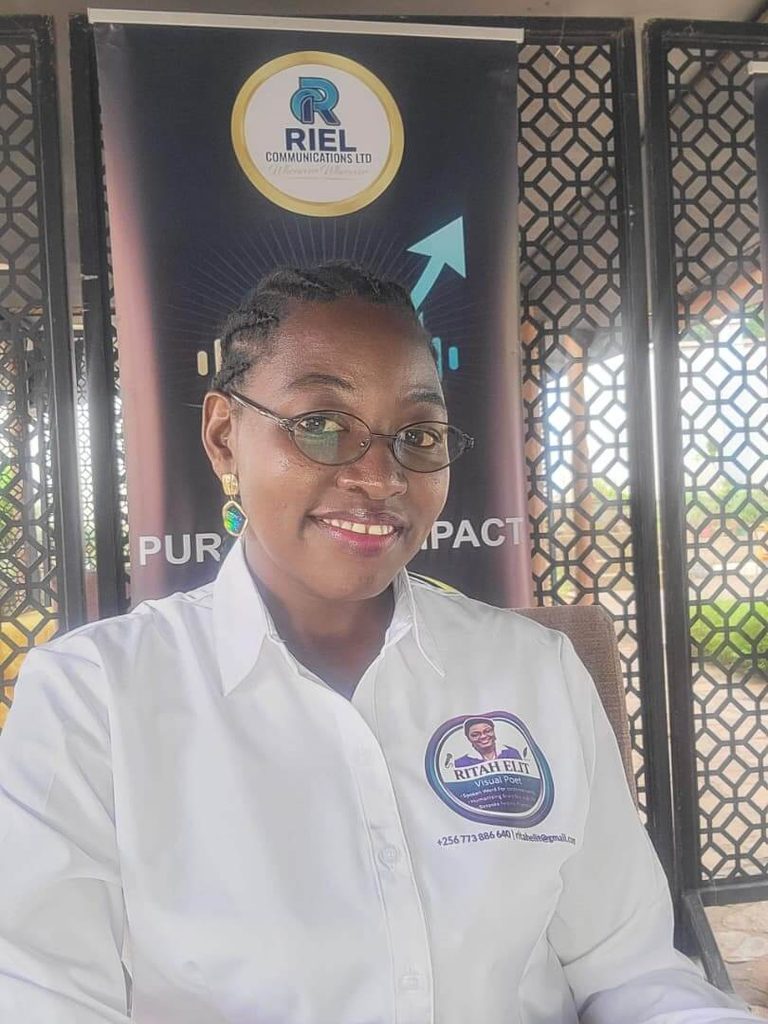
Ritah Elit is a Ugandan visual poet, communication specialist and Executive Director of RIEL Communications Limited. She uses performance art and spoken-word poetry to support youth-led community initiatives.
She is the founder of the TV and radio series THE VOICE OF PURPOSE & IMPACT and Team Lead of BYTE THE MIC, an inter-school expressive arts movement focused on youth mental health and digital well-being.
Through her work and partnerships with national and international organisations, she mentors young people and promotes creative expression as a tool for communication, leadership and social impact.
Get Involved
RIEL Communications invites individuals and organisations to support BYTE THE MIC by sponsoring a school, funding a student grant or supporting a mental health initiative at the Grand Finale.
Phone: +256 773 886 640
Email: rielcommunications142@gmail.com
You need to login in order to like this post: click here








Madam Ritha, I side you.