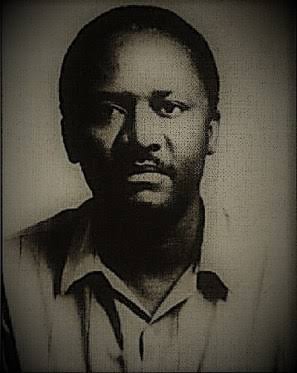

The renowned Ugandan cultural writer and poet, Okot p’Bitek, was one of Africa’s most well-regarded anti-colonial and decolonial versifiers, widely celebrated for using his writing to challenge Western cultural dominance in an attempt to salvage Acholi traditions.
He began his formal life as Jekeri, which is an Acholi form of the biblical name Ezekiel. He later dropped the name while studying in Britain. Where he studied education, law, and social anthropology at the University of Bristol, the University of Wales, and the University of Oxford.
Instead of aping European literary styles, he revolutionized East African literature by integrating the oral traditions, songs, and metaphors of his native Acholi people. His rejection of any form of Anglophilia, the excessive love for all things English, turned him very much into an African intellectual of his time.
African intellectuals at the dawn of independence, the 1950s and 1960s, rejected colonialism not just politically, but epistemologically, by developing distinct homegrown philosophical and political theories. These conceptual frameworks aimed to dismantle the “colonial library”, reassert African human dignity, and provide a blueprint for autonomous socio-economic development.
In doing so, post-independence African thinkers propounded theories such as Négritude, African Socialism (Ujamaa), and Consciencism. These frameworks redefined African identity, agency, and political economy outside of European domination.
Bard to the bone
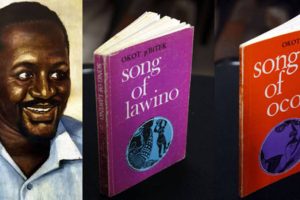
Okot p’Bitek, a poet’s poet, was a full-blooded anti-imperialist thinker. His 1966 epic poem, Song of Lawino, published the year England won its only World Cup, is about Lawino, a rural African woman.
She fiercely defends Acholi traditions while lamenting her university-educated husband, Ocol, who has abandoned his roots for Western ways. Okot p’Bitek followed this up with Song of Ocol, published in 1970, presenting Ocol’s response. It acts as a satirical critique of the internalized colonialism and self-hatred found among the new African elite.
Through his popular verse, p’Bitek urged Africans to stop blindly mimicking European culture, a habit he famously labeled “apemanship”.
Through his poetry and essays like Africa’s Cultural Revolution, he attacked the colonial school system and Christian missions for teaching Africans to despise their own history and faiths. However, although he was vocabular and trenchant when it came to facing down colonialism and its deleterious effects on the African mind, he could not completely disembarrass himself from colonial or western literary archetypes. Indeed, one could say he assimilated several literary and philosophical vehicles to drive his arguments home.
Poetic syncretism
Okot p’Bitek is universally credited as the founder and pioneer of the Song School of African poetry. His 1966 publication of Song of Lawino single-handedly revolutionized East African literature by establishing this entirely new poetic genre.
Before p’Bitek, much of the written poetry coming out of African universities strictly mimicked European forms, using rigid meters, complex rhyme schemes, and heavy allusions to Western mythology.
Stepping away from this canon, p’Bitek embraced some of elements. He blended traditional African oral performance orthodoxies with Western literary structures. Thus, he reimagined poetry not as a silent, text-bound exercise, but as a dynamic, communal, and musical performance. His lyrical, somewhat heterodoxic poetry, intentionally fused indigenous linguistic rhythms, proverbs, and structural devices with the English language and written poetic forms to construct a hybrid postcolonial identity.
This poetic synthesis encompasses several distinct elements, namely proverbs and metaphors, to carry the weight and nuance of African thought patterns. In the process, he discarded strict Western meters like iambic pentameter. Okot p’Bitek instead adopted the sharp, tonal cadences of his indigenous Acholi language.
This gave birth to the long, dramatic monologues found in his works which were divided into rhythmic movements. This literary pacing closely mimicked traditional musical compositions rather than standard Western poetic stanzas.
Furthermore, his poetic syncretism was not just an aesthetic choice; it was a deeply political act of cultural reclamation. By packaging African oral art forms within the universally distributed medium of the printed book, he validated indigenous oral traditions on the global literary stage. In print, his poems successfully challenged the colonial assumption that serious literature must conform to European structures.
To be sure, his syncretism acts as a strategic tool of cultural resistance by blending dominant colonial idioms with indigenous traditions. Far from passive assimilation, this creative process allows marginalized communities to preserve their original identities, agency, and spiritual autonomy under the guise of conformity.
Satire and irony
Okot p’Bitek utilizes satire and irony as central stylistic weapons to dismantle cultural alienation, expose the post-colonial betrayal by political elites, and critique the blind adoption of Western values in Africa.
Instead of deploying abstract academic theories, p’Bitek anchors his satire in traditional Acholi oral performance styles, using sharp humor, exaggeration, and dramatic monologues to make systemic failures immediate and highly ridiculous.
In his masterpiece Song of Lawino, the protagonist Lawino uses razor-sharp satire to mock her husband, Ocol. Ocol is a Western-educated African who completely rejects his cultural roots. Lawino likens Ocol’s modern behavior to a “dog of the white man” barking at his own people. Through her eyes, the blind copying of Eurocentric mannerisms is framed as a tragic loss of identity.
Not one to go slow when going hard is an option, p’Bitek intensely lampoons the foreign missionary enterprise. In Song of Lawino, Christian concepts and names are systematically reduced to absurd components. Lawino targets the artificial nature of Christian practices and the moral failings of local religious converts who look down upon traditional African spirituality.
In Song of Ocol and Song of a Prisoner, the focus shifts to the betrayal of ordinary Africans by the newly empowered political elite. The irony is bitter: the local leaders who promised “Uhuru” (freedom) have merely replaced the white colonial masters, scaffolding oppressive structures while hoarding wealth and crushing dissent.
Feted and toasted across the literary globe, Okot p’Bitek’s poetry, owing to its technical virtuosity and sheer pig-headedness, is the dominant formal structure in modern Ugandan poetry today, functioning as a crucial bridge between indigenous oral performance and contemporary written literature.
While Western free verse (vers libre) emerged primarily to break away from rigid European metrical frames, p’Bitek’s brand of free verse serves a dual purpose. It rejects colonial literary constraints while naturally capturing the rhythmic, fluid cadence of traditional African speech and song.