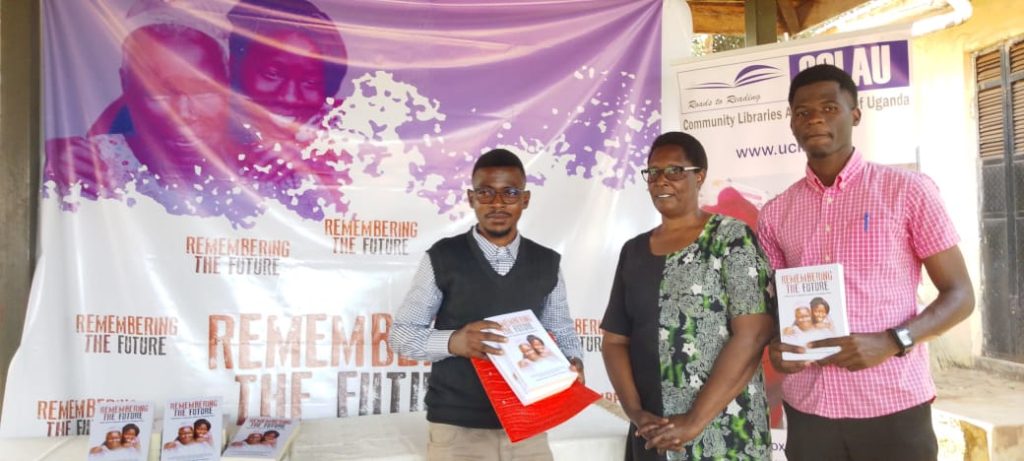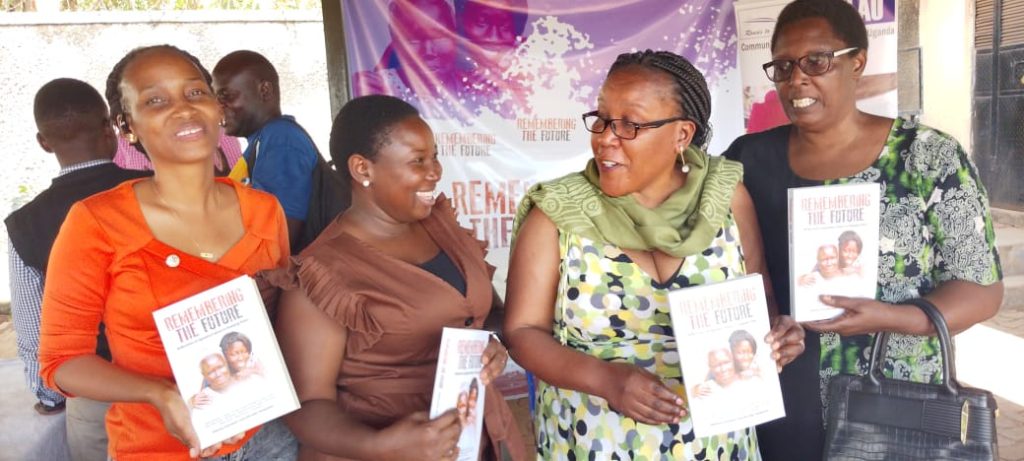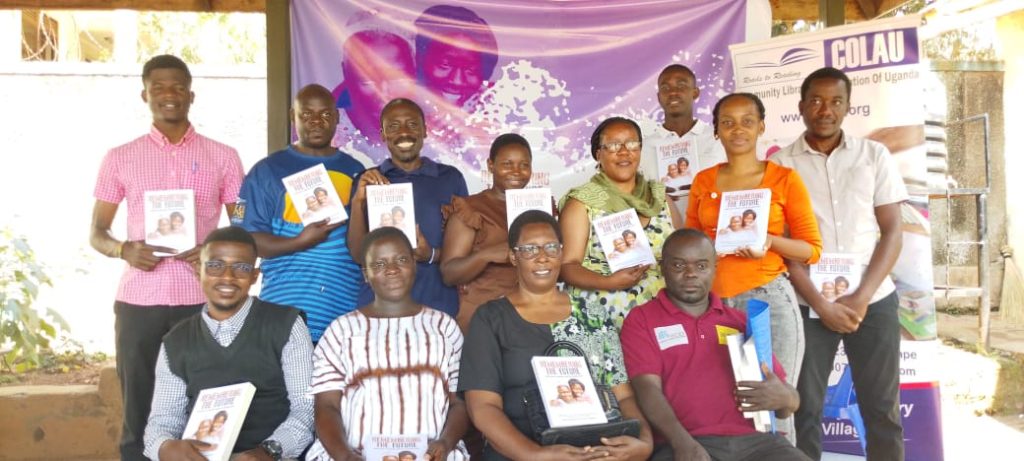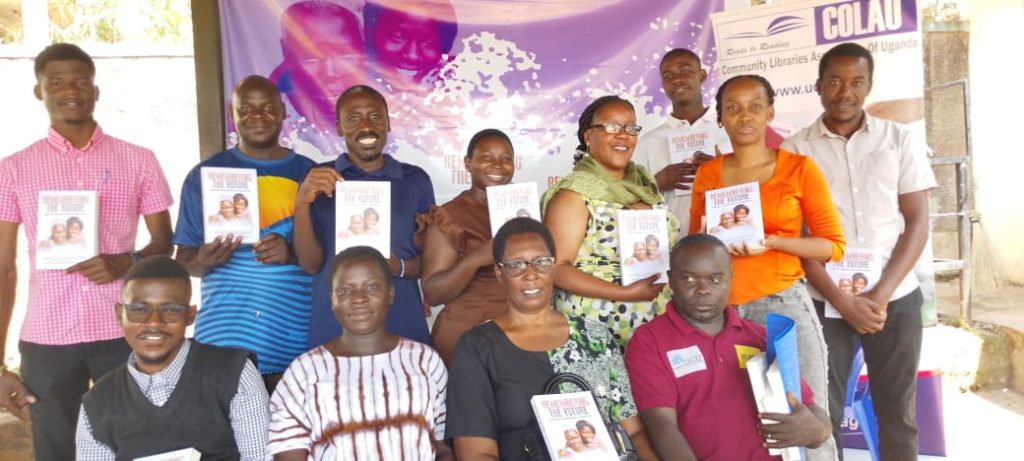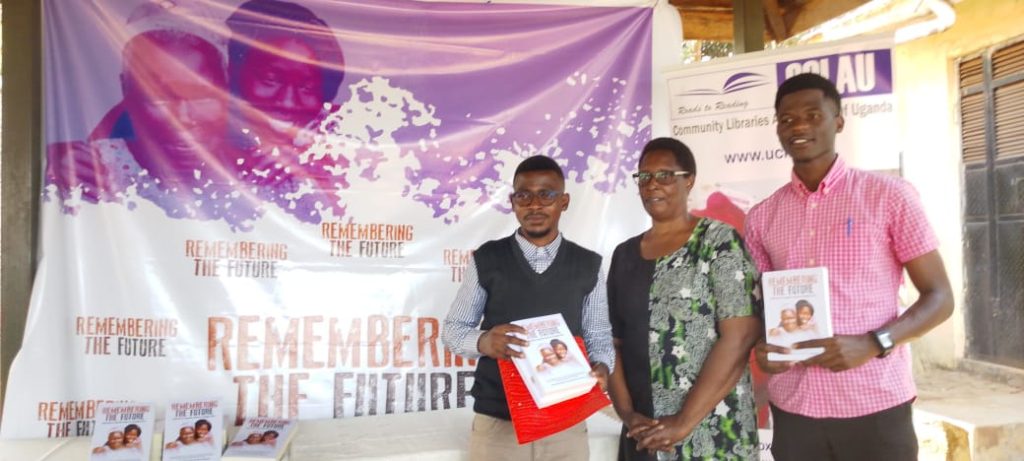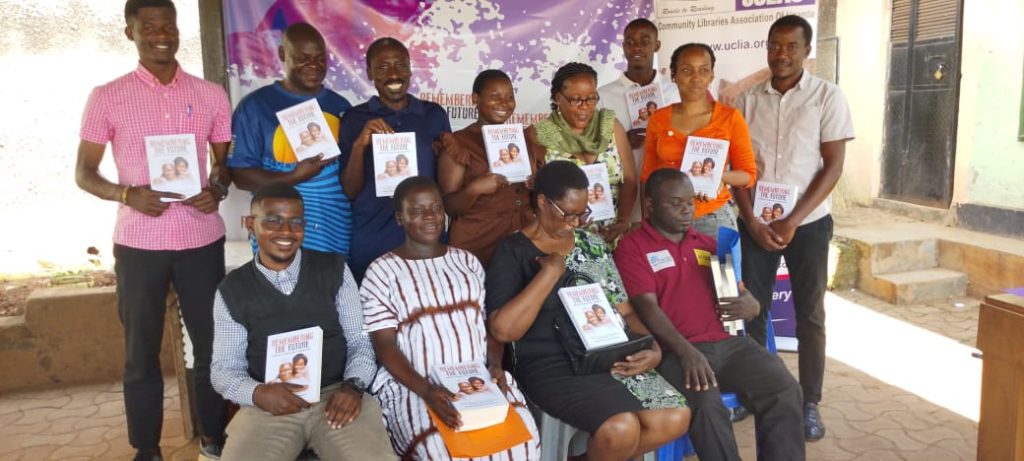

On Friday July 26th, the groundbreaking book “Remembering the Future: Reflections on Ugandan Culture in Changing Times”, was donated to the Community Libraries Association of Uganda (COLAU/UgCLA), the leading network for grassroots and community-run libraries across the country at the Kawempe Youth Center.
The event, basking in the soft-glow of a Kampala morning, was attended by a number of Ugandan stakeholders in promoting reading cultures and digital literacy.
Attendees were Treasure Children’s Charity, Nansana; Centre For Youth Driven Development Initiatives(CFYDDI), Gayaza; Mansueto Library/Azira Michael Foundation ,Kiboga; Kawempe Youth Center; Echo Rural Arise Africa, Makindye; Youth Rising Uganda,Mukono; Nambi Sseppuya Community Resource Centre, Igombe. Each of these attendees received 5 books.
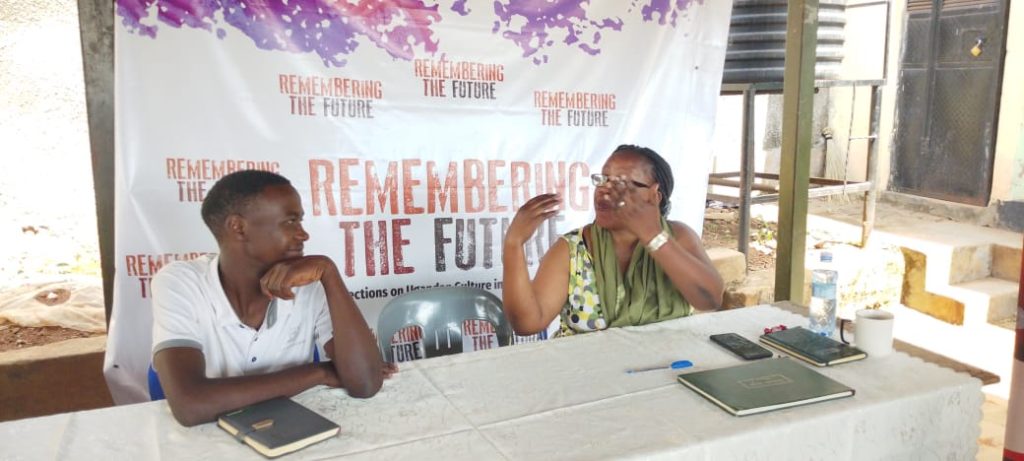
To set the event in train, Ms. Edna Namala discussed her work. In her essay from the anthology Remembering the Future: Reflections on Ugandan Culture in Changing Times. In her story, A Bride’s Farewell Song, Ms Namala shares a personal and reflective story about her upbringing in southwestern Uganda. She navigates the complex tension between traditional African values and the rapid, often overwhelming changes brought on by globalization and modernization.
By recounting her own life, Namala explores the friction between the indigenous knowledge and cultural morals taught to her by earlier generations, and the modern, Western-influenced aspirations of today’s youth. Her narrative emphasizes how language and storytelling act as crucial bridges between generations. She highlights the importance of keeping ancestral wisdom alive to ground the contemporary Ugandan identity amid societal shifts.
Her story, set in southwestern Uganda, challenges cultural practices of the Bakiga tribe which stand in stark contrast lessons gleaned from woman emancipation and empowerment between the sexes. It touched off a quiet storm of discussion as attendees were forced to look their own cultural inclinations in the eye as they questioned themselves forthrightly.
The book Remembering the Future is sure to have an even greater impact on Ugandan society, adding to its already salutary impact.
“Partnering with Remembering the Future is an opportunity for Community Libraries Association to first of all share the stories written in the book with other community libraries, not just in Kawempe. Because we currently have over a 100 community libraries. So much as we had a representation from few of the libraries, as an association we are going to come up with short posts and ignite conversation around the stories in the book. The stories shared directly resonate with our societies. The stories are real life stories and these are things that happen in our societies. It’s an opportunity for our members to also have these conversations in their library spaces and discuss the realities of things in line with those stories,” says Catherine Amia Walsh, the National Coordinator for the Community Libraries Association of Uganda (COLAU), an umbrella NGO and network of over 150 community libraries dedicated to promoting productive literacy practices and achieving “a library in every village”.
The anthology Remembering the Future: Reflections on Ugandan Culture in Changing Times is a cultural milestone on the road to barrier-breaking and thought-fomenting literature. This anthology was published in 2023 by Ibua Publishing. Christopher Conte, an American journalist who spent fifteen years as a reporter and editor for the Wall Street Journal before beginning a freelance career, co-edited the anthology to meaningful notoriety.
Adding icing to a CV that even Mr. Conte’s naysayers would say yes to, Ugandan author/book editor Ms. Hilda Twongyeirwe throws more than her bluestockings into the arena, so to speak. Her efforts to support the growth of literature in Uganda and beyond cannot be gainsaid.
Muscling in alongside a star-spangled cast of Ugandan writers, the editorial duet’s efforts to light up Uganda’s literary firmament are an unqualified success.
“I am hnoured by the interest and support you have shown for Remembering the Future. I can’t think of an audience to reach for our book, which celebrates your rich heritage and raises important questions about its future,” says Mr. Conte.
This highly acclaimed book challenges Eurocentric narratives that label African traditions as barriers to modern development. Famous Ugandan poet and educator Timothy Wangusa hailed it as “the most outstanding book that Uganda has yet mothered.”
To be sure, Professor Wangusa’s clever turn of phrase is also his nod to cultural resistance in literature. Cultural resistance is the practice of using creative expressions—such as language, symbols, music, art, and traditions—to contest a dominant power or preserve an identity under threat.
Cultural resistance in African literature is the deliberate use of creative writing to challenge colonial hegemony, dismantle Eurocentric stereotypes, and reclaim indigenous history and identity. Rather than relying solely on political or military warfare, African writers weaponize storytelling to subvert the psychological and cultural impacts of imperialism.
Well known literati in African literature who employed this literary approach were Chinua Achebe (Nigeria), widely regarded as the father of modern African literature. He countered colonial texts by depicting complex, self-governing pre-colonial Igbo societies in his masterpiece trilogy (Things Fall Apart, No Longer at Ease, Arrow of God).
Another quiver from that Arrow of God was Ngũgĩ wa Thiong’o (Kenya). He remains the leading voice on linguistic decolonization. He famously abandoned writing in English to write exclusively in Gikuyu, arguing that utilizing a colonizer’s language traps the African mind in an ongoing state of cultural captivity.
For a literary trifecta, Wole Soyinka (Nigeria) must be noted as a chief exponent of cultural resistance. The first African Nobel Laureate in Literature. He synthesized traditional Yoruba cosmology, mythology, and ritual drama with Western theatrical forms to build a powerful aesthetic framework that fiercely criticized both colonial rule and post-independence local dictatorships. The book Remembering the Future: Reflections on Ugandan Culture in Changing Times joins the literary canon..