
You need to login in order to like this post: click here
By Philip Matogo
It is not enough for parents to talk. They must also act—and be seen acting—in accordance with the values they want their children to learn.
Children watch. They question. They imitate. And sometimes, they expose the contradictions between what adults teach and what adults actually do.
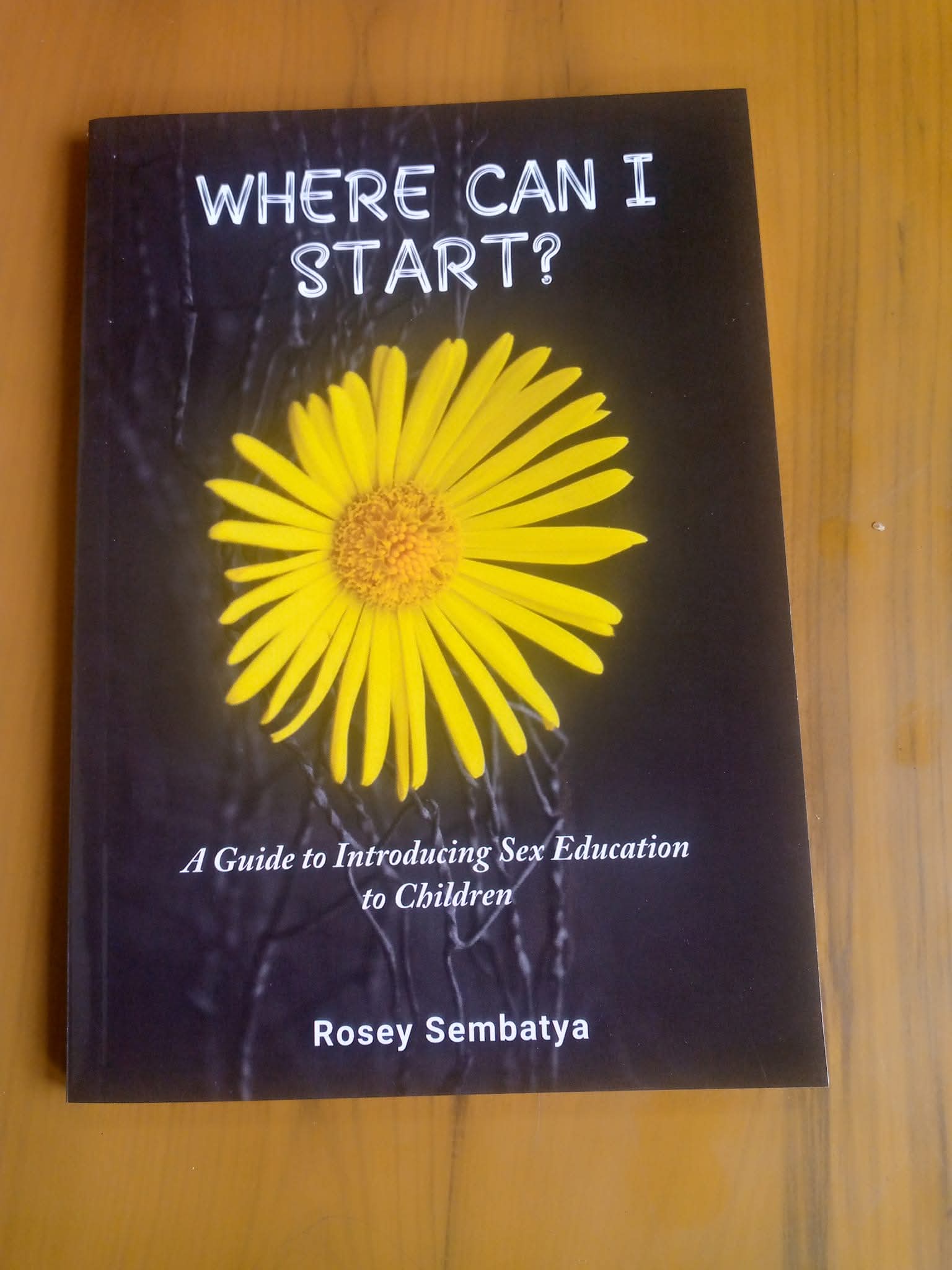
This is one of the central ideas explored in Rosey Sembatya’s Where Can I Start? A Guide to Introducing Sex Education to Children, a book that encourages parents to be intentional about introducing sex education to the children they raise.
The book approaches sex education not merely as a conversation about the body, but as part of the wider responsibility of helping children develop emotionally while learning to understand themselves and navigate the world around them.
This becomes particularly clear in Chapter Seven, titled “Align Your Actions with Your Values.”
Sembatya recounts an amusing but revealing encounter with her six-year-old niece. She had helped enforce a family rule that the young girl should never wear a short dress without leggings. Then, one Sunday, Sembatya visited her sister wearing a short dress herself—with no leggings.
Her niece immediately noticed.
“One Sunday I decide to visit my sister. I had not paid much attention to the length of my dress. When I arrive, my 6 year old niece asks me where my leggings are.”
The question placed the adult in the very position from which she had previously instructed the child.
Sembatya admits that the experience exposed an inconsistency between the value she had been teaching and her own actions.
As she explains, she had been a strict enforcer of the leggings rule but, on that particular day, had failed to live by it herself. Her niece persisted in asking where her leggings were, turning what might ordinarily have been an insignificant fashion choice into a lesson about parenting.
Children, after all, are watching.
When Children Test the Values We Teach
Sembatya uses the experience to make a larger point: parental authority becomes difficult to sustain when the behaviour of the parent repeatedly contradicts the rules given to the child.
She describes moments like these as the “winds” that test whether parents are genuinely anchored in their values.
Parenthood continually presents such decisions.
What should a child wear?
When should a child receive a phone?
What should the family watch at home?
Which schools should the child attend?
How should parents approach sleepovers?
Which books and other forms of media should children encounter?
These questions may appear unrelated, but together they reveal something fundamental about parenting: values eventually have to become choices.
And those choices are not made in isolation.
Parents live among relatives, friends, neighbours and increasingly powerful online communities. Other families may make completely different decisions and appear to flourish while doing so. This can leave parents questioning whether their own standards are outdated or unnecessarily restrictive.
Sembatya consequently asks parents to consider whether, amid all these outside influences, they still possess their own sense of parenting direction.
Children Can See Through Us
Perhaps one of the chapter’s most important observations is remarkably simple:
Children notice inconsistency.
Sembatya warns that an unbalanced parent risks creating rules that are themselves unstable. A family may eventually reach workable compromises as children grow and circumstances change, but she argues that a home should nevertheless have certain clearly understood principles.
This is especially important when discussing sex education.
Children’s understanding of relationships, boundaries, modesty, bodies, behaviour and values does not emerge from a single formal conversation.
They are learning from what happens around them.
They observe what their parents permit, condemn, discuss, avoid and practise.
The parent’s life therefore becomes part of the lesson.
A Book That Asks Parents to Participate
Another useful feature of Where Can I Start? is its practical approach.
Exercises appear at the end of the chapters, encouraging readers not simply to consume the author’s ideas but to reflect upon and apply them.
That distinction matters.
A parenting guide can easily become another collection of principles that sound convincing on paper but disappear when confronted by everyday family life.
Sembatya instead repeatedly returns responsibility to the parent.
What do you believe?
Why do you believe it?
What are you teaching your child?
And, perhaps most importantly, does your own behaviour support what you are teaching?
Finding Parenting Balance
The discussion also opens into the broader question of parenting balance.
Parenting balance is not necessarily a perfect division of time and energy. Rather, it is an ongoing process of navigating competing responsibilities while maintaining enough stability to parent intentionally.
Four areas frequently compete for a parent’s attention:
Family and Parenting: caregiving, teaching, bonding and managing household responsibilities.
Career and Finance: earning an income, pursuing professional goals and providing economic stability.
Relationships: maintaining connections with partners, relatives, friends and the wider community.
Self-Care: preserving physical health, mental well-being, hobbies and one’s individual identity.
These responsibilities rarely divide themselves neatly.
Some days demand more from work. Others demand more from children, relationships or personal well-being. Balance therefore becomes less about achieving an ideal 50/50 arrangement and more about knowing what one values and continually adjusting without losing sight of it.
And this is where Sembatya’s anecdote about a short dress and a missing pair of leggings becomes more significant than it initially appears.
The child was not merely asking about leggings.
She was asking, perhaps unknowingly:
Do the rules you teach me also apply to you?
For parents introducing children to subjects as sensitive and consequential as sex education, that may be one of the most important questions of all.
You need to login in order to like this post: click here