You need to login in order to like this post: click here
By Philip Matogo
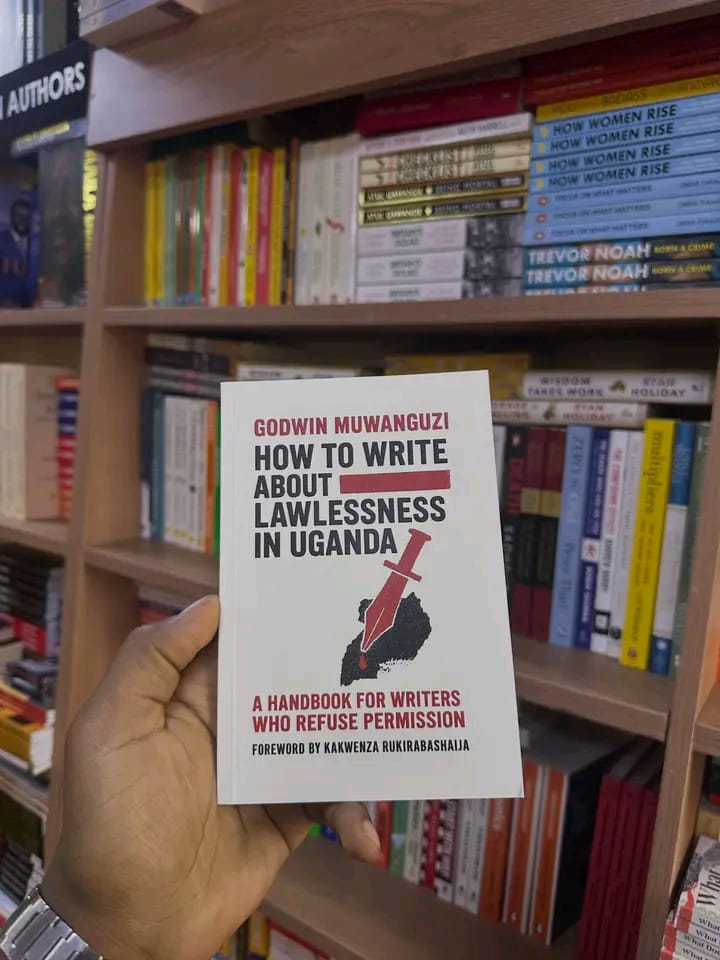
Author: Godwin Muwanguzi
Published: 2026
Pages: 42
Available from: nyusobookspress@gmail.com
Uganda has become a country where injustice is often ignored, excused or hidden behind careful language. In this short but provocative book, Godwin Muwanguzi argues that writers have a responsibility to tell the truth as they see it, especially when that truth is uncomfortable.
Drawing from Uganda’s political realities and the tradition of African protest literature, he reflects on the role of the writer in times of fear, repression and silence.
More than a handbook, this is a challenge to those who believe that literature should remain neutral while ordinary people suffer.
The African Tradition of Protest Literature
Protest literature in Africa is a dynamic body of work that serves as a tool for socio-political resistance, cultural reclamation and accountability.
Because physical public protests are frequently met with state-sanctioned violence and censorship across the continent, literature has historically provided a safer, more enduring medium through which writers interrogate systemic power structures.
This literary tradition has evolved in distinct waves, transitioning from resistance against external colonial rule to confronting the internal failures of post-independence governments.
In Uganda, it can be categorized into three distinct eras, alongside other tendencies that could be said to transcend time and space.
- The Post-Independence and Disillusionment Era: 1960s–1970s
Directly after gaining independence from Britain in 1962, Ugandan writers began evaluating the deep scars left by colonialism and the fragile state of their new democracy.
Okot p’Bitek
His foundational comic-philosophical poem, Song of Lawino (1966), is a major protest against cultural imperialism.
Through the voice of a rural woman, p’Bitek critiques Westernized Africans who abandon their indigenous cultures, languages and heritage in favour of colonial lifestyles.
Here, protest does not necessarily manifest as a demonstration in the streets. Literature itself becomes the arena of resistance.
- The Dictatorship and Clandestine Wave: 1970s–1990s
Under the regimes of Idi Amin and Milton Obote, open criticism could carry grave consequences. Protest literature in Uganda consequently found expression through symbolism, allegory, underground theatre and other less direct forms.
John Ruganda
Known for his dramatic exploration of post-independence African society, Ruganda wrote plays such as The Burdens (1972) and The Floods (1980).
These works employ psychological and political allegory to explore terror, paranoia, violence, corruption and the burdens carried by ordinary people in unstable political environments.
Robert Serumaga
Playwright Robert Serumaga similarly employed experimental theatrical forms in confronting political and social realities.
Such writers demonstrate one of protest literature’s most important characteristics: when direct expression becomes dangerous, artistic language can acquire additional layers.
Metaphor becomes more than decoration.
Allegory becomes more than technique.
The stage itself can become a political language.
- The “Take Back the Country” Era: 1990s to the Present
The review then turns towards contemporary forms of Ugandan protest writing.
Among the figures associated with this tradition is academic, writer and activist Dr. Stella Nyanzi, whose work has employed a Ugandan tradition frequently described as “radical rudeness.”
The approach deliberately uses provocative and sometimes taboo language to confront structures and personalities associated with political power.
It is within this tradition of confrontational expression that Muwanguzi develops one of the more provocative arguments in the book.
Supporting Nyanzi’s use of radical rudeness, Muwanguzi argues that oppressed people cannot be restricted to a single approved language of resistance.
As he puts it:
“There is no single language for the oppressed to fight back.”
Muwanguzi goes considerably further, arguing that the language used in such circumstances may be abrasive, epithet-heavy or even defamatory if, in the writer’s view, it becomes a means of responding to brutality and reclaiming lost freedom.
It is a deliberately confrontational proposition.
And therein lies one of the central questions raised by How to Write About Lawlessness in Uganda: Who determines the acceptable language of protest?
If writers are expected to seek permission regarding how injustice may be described, can their literature still function as protest?
Muwanguzi’s answer appears embedded in the title itself.
For him, the writer must be willing to write without waiting for permission.
Whether readers agree with his methods or reject them, the book places an old literary question back on the table: What responsibility does a writer have when confronted by what they perceive as injustice?
And, perhaps more provocatively:
When society becomes uncomfortable with what a writer says, should the writer become quieter—or should the discomfort itself become something worth writing about?
About Godwin Muwanguzi
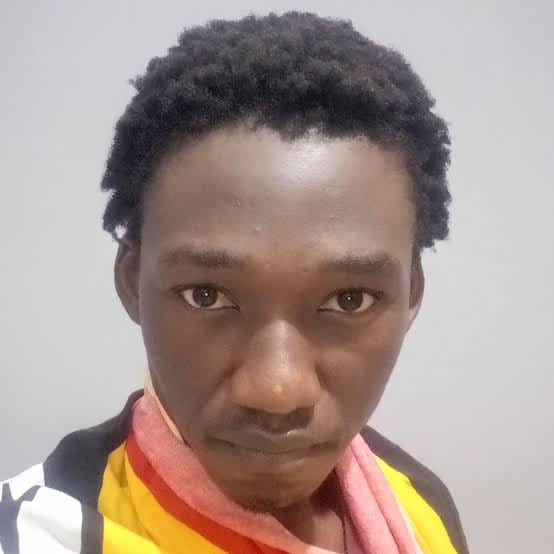
Godwin Muwanguzi is a Ugandan novelist, poet, editor and essayist whose work explores literature, freedom of expression, political thought and the responsibilities of writers in society.
Through fiction and nonfiction, he examines the relationship between power, language and truth, advocating for a tradition of writing that confronts injustice and engages directly with the realities of African life.
You need to login in order to like this post: click here