You need to login in order to like this post: click here
By Geoffrey Asimwe
Ladies and gentlemen — ladies especially.
It has come to my attention, at the rather humbling cost of realizing I am not as knowledgeable as I thought, that false eyelashes are not what I thought they were.
I discovered how far behind I was only after I asked.
It started when I complained to a friend about a mutual friend whose lashes made her look like a doll.
My confidante gently corrected me.
Eyelashes, she explained, are accessories — beauty enhancers. In fact, she herself was considering getting a pair and was shopping around for options.
I was shocked to learn how many people wear them. It had simply never registered.
She told me there are types — some so natural you can hardly tell, and some bolder, more dramatic. Like clothes, she said, lashes come in different styles.
What I had seen was probably the bold look, for someone experimenting.
And the friend who first caught my eye is in her twenties, which is understandable. I am much older, and the experiments of young people can still shock me.
So, What Is the Backstory?
I have known this young woman as a God-fearing, Bible-professing Christian. I have no doubt she is grounded in the faith and loves the things of God.
Then one day, she came — and lo and behold — Barbie herself.
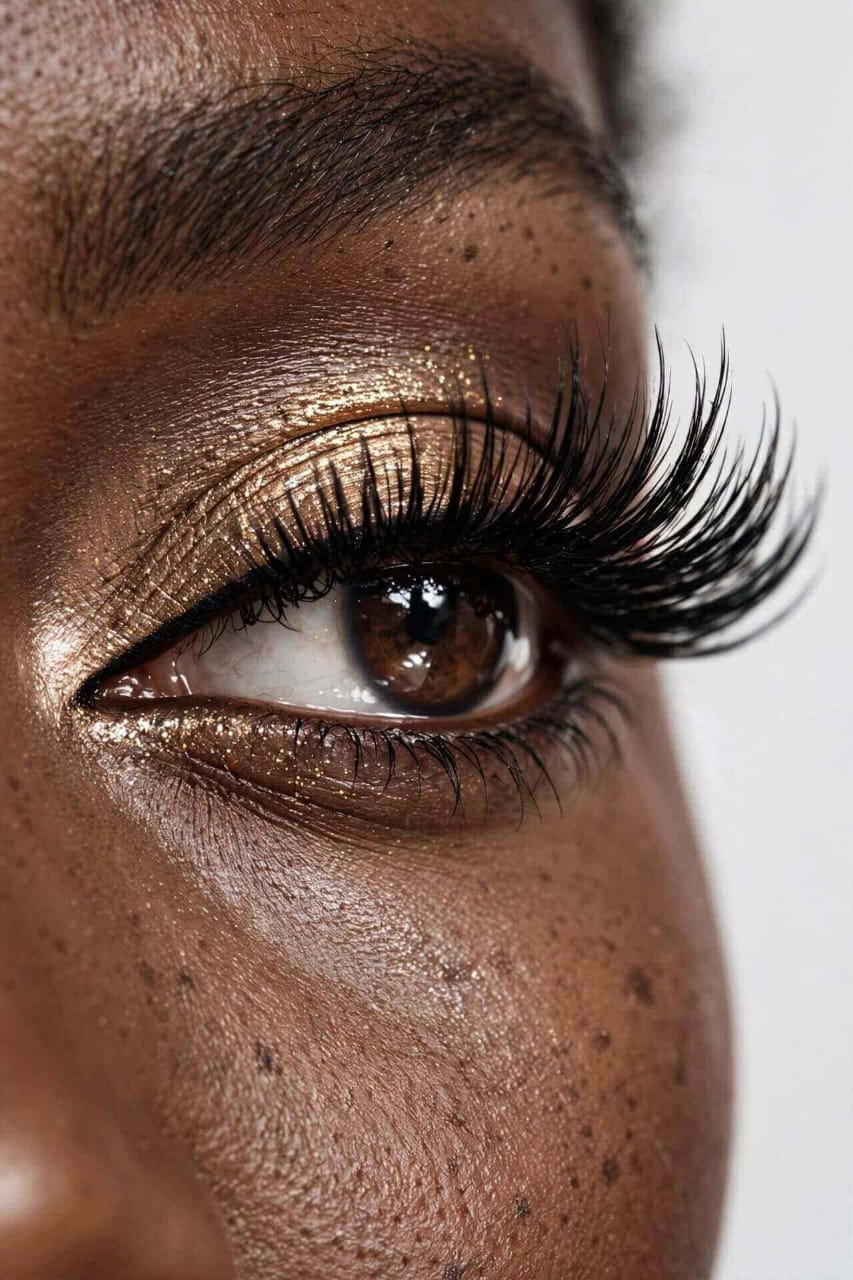
Those long, dark, unmistakably attached lashes.
The kind that makes the wearer look like she is peering out from behind a shade.
The kind of thing that, even if you want to mind your own business, you cannot help but notice.
It was a hot day and I had better things to think about, so when we parted, I forgot about it.
The following week.
Again.
This time, the shock registered.
It was recorded for later discussion — by my inner members.
Having had no prior close encounters except passing strangers — whose business is not my business — I threw a casual question into a WhatsApp group:
What is the use of fake eyelashes?
No answer.
Then came an inbox reply: they are insecure, hence the need for all these fake attachments.
My inner council kept deliberating with the limited knowledge available.
Why would someone think looking like a doll is cool?
Why wouldn’t people close to her simply tell her that look doesn’t work in a corporate environment?
Was I subconsciously associating false lashes with a certain lifestyle?
Looking Beyond the Lashes
So I began to look into the history — much like tattoos.
In Scripture, tattoos and cuttings were forbidden not merely as fashion, but because they were tied to ancient religious customs.
In temple harlotry, the prostitute would serve as a vessel, a conduit through which the spirit of the deity being worshipped would transmit a “blessing” to the person performing the ritual.
The body was altered to become a false presentation — a shadow of the true self, offered for spiritual commerce.
With time, of course, the custom remained even when the religion itself was no longer practised.
What started as ritual became fashion.
What started as spiritual practice became culture.
I see a parallel here.
It is not that a lash strip is a shrine.
It is that the principle is ancient: when we attach to ourselves what is not ours, we risk trading our true image for an external one.
For many who suffer from lack of self-awareness, that distortion — clinging to a shadow rather than the substance within — is the real pain.
It is not about lashes, but about identity.
A Crash Course in Eyelashes
Days later, having reached a well-debated conclusion in my head — mind, will and emotions all in agreement — I raised the question again where it had previously been ignored.
The replies came swiftly, mostly as survival advice:
“Geoffrey, there are 1,000 ways to die. That is one of them. If you want to live long in peace, learn to crucify your curiosity. Never check a woman’s purse.”
Shortly after, the friend who had told me she was considering lashes herself gave me a crash course.
It helps build confidence, she said.
However, some are so uncomfortable they get in the way of seeing and stress the eyes.
Sometimes it’s peer pressure — everyone is doing it.
“When I try mine, I’ll want something that doesn’t look obvious but just adds to my look,” she concluded.
Maybe I Was Wrong
I realized I had been simplistic.
Subconsciously, I had judged without ever confronting the issue for myself.
To those who may have been offended, I admit I darkened counsel with words without knowledge. I indulged in matters higher than myself.
I have since learned that, like clothes or shoes, lashes can simply be accessories.
They can build confidence, signal belonging, or help one keep up appearances in spaces where appearance matters.
But I still wonder:
At what point does enhancement stop being just an accessory and start becoming identity?
When does what we add to ourselves begin to define us more than what is already within us?
If you wear them — why do you?
If you don’t — what holds you back?
Let’s talk.
WakeUp!
You need to login in order to like this post: click here