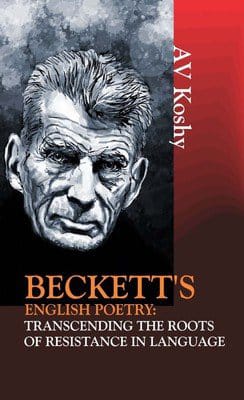
The Bridled Anguish of Non-Expression: Samuel Beckett’s Poems in English is a sustained study of Samuel Beckett as poet, bringing into focus an important but comparatively less explored dimension of a writer more commonly associated with drama and prose.
The book traces Beckett’s poetic journey in English, following the development of his poetic imagination through his formative literary years, his years of travel and intellectual wandering, and his increasingly distinctive engagement with the possibilities and limitations of language.
The study is organised into three broad sections: The Years of Learning, The Years of Wandering, and The Blue Celeste of Poesy. Together, these sections offer a movement through the making of Beckett the poet—from his early encounters with literature and the intellectual influences that shaped him, through the experiences of displacement, travel and artistic discovery, towards the highly individual poetic voice of his later years.
A substantial part of the study is devoted to Echo’s Bones and Other Precipitates, Beckett’s first collection of poems in English.
The poems—“The Vulture,” “Enueg I,” “Enueg II,” “Alba,” “Dortmunder,” “Sanies I,” “Sanies II,” “Serena I,” “Serena II,” “Serena III,” “Malacoda,” “Da Tagte Es,” and “Echo’s Bones”—are examined as important evidence of the young Beckett’s developing poetic sensibility.
They reveal a poet immersed in literary tradition and allusion, but already fascinated by mortality, the body, desire, memory, alienation, decay and the precarious relationship between experience and language. However, this is a continuation of Lawrence E Harvey’s massive tome on the same.
The book then moves towards Beckett’s later poetry, where the exuberance and density of the early poems give way to an extraordinary economy of language.
Particularly noteworthy is the sustained attention given to the late poems “dread nay” and “something there.” These poems have received far less sustained attention than Beckett’s major dramatic and prose works, and the study offers an extended reading of their remarkable linguistic compression, fractured syntax, repetitions, silences and shifting patterns of perception.
In these late poems, Beckett appears to push poetry towards the very edge of articulation. Language is reduced, pared down and repeatedly tested, until the smallest word, fragment or hesitation seems to carry enormous weight.
The juxtaposition of “dread nay” and “something there” is particularly suggestive. The movement from nay—a word of negation and refusal—to the tentative affirmation of something there captures something essential about Beckett’s late poetic world.
What remains when words have been exhausted, when perception can no longer be trusted and when expression approaches silence?
Beckett’s answer is not complete silence, but the faint persistence of something: an image, a sound, a memory, a presence, however uncertain.
This is where the title of the book, The Bridled Anguish of Non-Expression, acquires its full significance.
Beckett’s poetry is animated by an intense desire to express, even as it continually confronts the inadequacy of expression. His poems do not simply speak about silence; they enact the struggle between speech and silence.
Words advance and retreat, repeat themselves, fragment and sometimes almost disappear. Yet the impulse to speak persists.
The book consequently presents Beckett’s poetry as an important laboratory for understanding the larger Beckettian imagination.
The concerns that would become so powerful in his fiction and theatre—waiting, absence, memory, mortality, solitude, the body, consciousness, failure and the limits of language—are already being tested in his poetry.
The poems also reveal a Beckett who is playful, erudite, ironic, sensual and deeply engaged with the literary traditions from which he emerged.
Moving from The Years of Learning, through The Years of Wandering, to The Blue Celeste of Poesy, The Bridled Anguish of Non-Expression follows not merely the chronology of Beckett’s poems but the gradual making of a poetic consciousness.
It invites readers to look again at Beckett the poet and to recognise in his English verse a sustained and often moving struggle to say something in the knowledge that language may never be capable of saying enough.
This study does not go into looking at Beckett in terms of the usual cliches of absurdity, nihilism, atheism, antitheism, existentialism or of theories like deconstruction, though the latter is brought into conjunction with his movement from Modernist poetry to postmodern poetry.
View the book on Amazon
https://www.amazon.com/Becketts-English-Poetry-Transcending-Resistance/dp/817273722X
Author Biography
Dr. Ampat Koshy
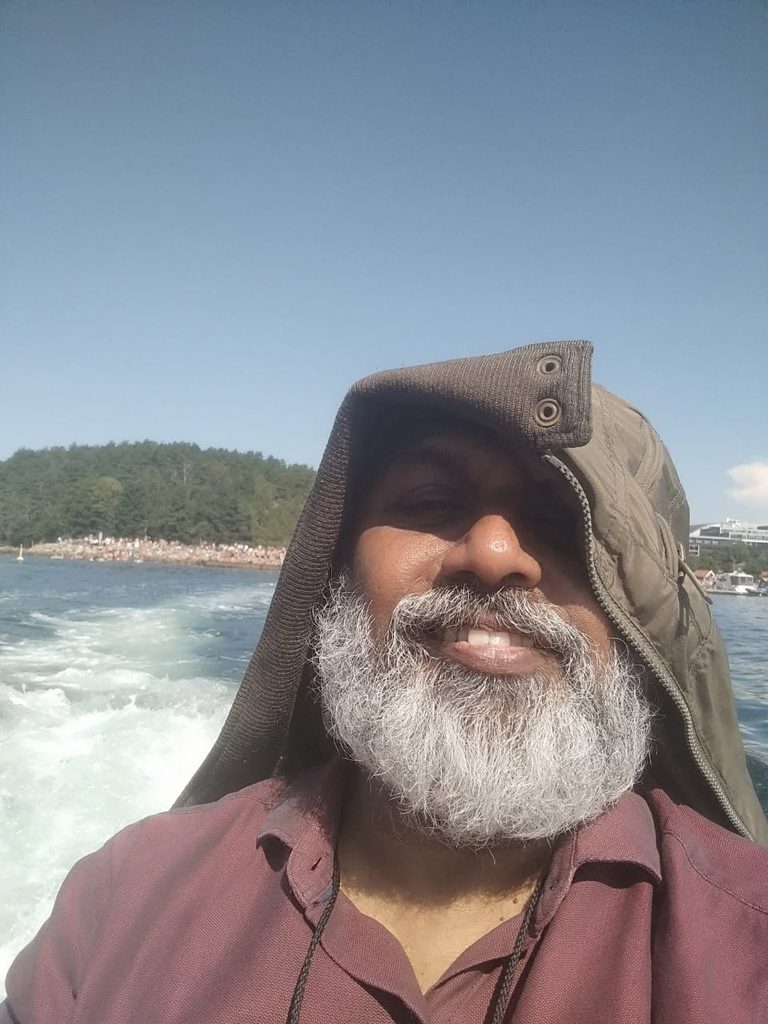
Dr. Ampat Koshy is an Indian poet, writer, literary critic, editor and academic based in Bengaluru. He teaches in the Department of English at Mount Carmel University, Bengaluru, where he is involved in teaching, research, curriculum development and postgraduate supervision. His academic and literary interests span poetry, modern and contemporary literature, literary criticism, comparative literature, creative writing and the intersections between literature, culture and society.
Koshy is particularly known for his sustained engagement with Samuel Beckett and poetry. His critical work includes The Bridled Anguish of Non-Expression: Samuel Beckett’s Poems in English, a study that traces Beckett’s poetic development through The Years of Learning, The Years of Wandering and The Blue Celeste of Poesy. The study gives particular attention to Echo’s Bones and Other Precipitates and offers extended readings of Beckett’s later poems, including “dread nay” and “something there,” bringing into focus the continuing tension between expression and silence in Beckett’s poetry.
As a poet, Koshy has written across a range of subjects and forms, often combining personal, social and political concerns with literary and philosophical reflection. His published books include A Treatise on Poetry for Beginners, Scream and Other Urbane Legends, Birds of Different Feathers, Allusions to Simplicity, Wrighteings: In Media Res and Wake Up, India: Essays for Our Times. His work has also appeared in literary journals, anthologies and other publications.
His wider literary practice includes editing, anthology-making, reviewing, research and literary criticism, alongside participation in conferences and literary events. He has taught internationally, including at the University of Jazan in Saudi Arabia and the University of Magrib in Libya, before continuing his academic career in India.
Koshy’s work has received international and national recognition, including Pushcart Prize and Hindu Literary Prize nominations, among other literary distinctions. His writing and scholarship are marked by an interest in the relationship between literature and lived experience, and by a continuing commitment to poetry as both an aesthetic practice and a mode of critical engagement with the contemporary world.
Dr. Ampat Koshy lives and works in Bengaluru, where he continues to teach, write, research, edit and engage with literature, faith and autism across genres and traditions.