By Philip Matogo
Devis The Poet’s poetry is allegorical. That is a form of poetry that simultaneously operates on two separate levels of meaning: a literal surface story and a deeper symbolic message. In these poems, the characters, settings, and plot elements function as an extended metaphor to convey complex and multifaceted ideas.
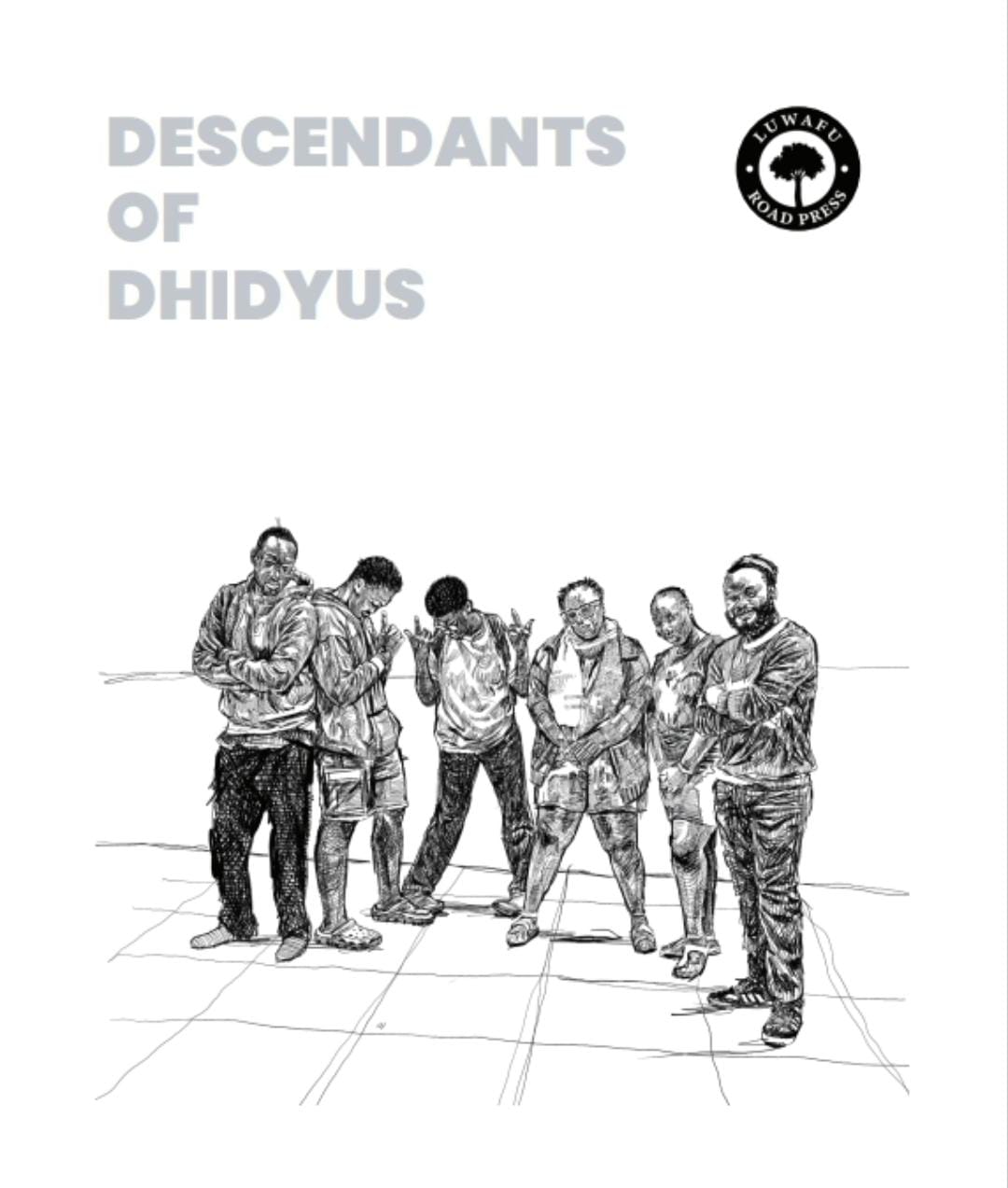
Devis’s tale is a mock-heroic or mock-epic poem, titled Descendants of Dhidyus, which could also be termed an epyllion (a brief narrative poem) and romance. If you’re familiar with Devis’s verse you know that it is never just this or that. It is often a mixed bag of the same thing, if that makes sense.
Dhidyus might be pronounced as “Diddy us,” and thus be more contemporaneous than classical in tone.
Dhidyus, like Diddy, is battling a curse. Well, if that’s what your moral compass leads you to believe. He seems to have a reverse Midas touch.
“Rumor has it he later sired children that he never fathered. Those children also had children and their children had children. These children, descendants of Dhidyus, are believed to be the toxic lovers of this world,” writes the author.
In short, all Dhidyus touches shall die.
His touch is a “fatal touch” or decay power which causes instant death, breakdown, or life-drain upon physical contact. Other authors have deployed this murderous quality. Well-known examples include Tomura Shigaraki (My Hero Academia), the Duke (The Duke of Death and His Maid), and Elixir (Marvel Comics).
It all started thus: There was a god (who mustn’t be named) who fell head first in love with a mortal woman.
When his wife, a goddess, discovered their passionate affair, her rage almost consumed her from inside. She came down to earth to destroy the mortal woman, but found her asleep, serene and pregnant.
The knowledge of their love’s strength stayed her hand. If she killed the woman, her husband might never forgive her. May be he would leave her for good.
So she whispered a curse instead:
“and because you have poisoned my marriage. Your son will be the poison of this the world. All he touches shall die.”
Dhidyus, despite fate’s dark hand, meets Lyra. They marry but then she becomes Sisyphus, as it were.
Sisyphus is a figure from Greek mythology famously condemned to roll a giant boulder up a hill for eternity, only for it to roll back down right before reaching the top.
The name Lyra is a small constellation in the northern sky named after the Latin word for a lyre (a small harp), famous for containing the bright star Vega. Being a constellation is crucial to the starless fate her life is darkened by.
That’s because the poem then shows in feet and meters how she falls, by falling in love with Dhidyus.
Here I offer no spooler alert in saying that this tale, full of self-consuming passion, winds up in the second circle of hell. This reminds the reader of Dante Alighieri’s 14th-century epic poem Inferno whence the penultimate circle is the designated resting place for the lustful.
The spoiler would have been obvious if there was not so much symbolism in this poetry, the author like other authors uses this literary device as he conjures characters and realties to represent abstract ideas beyond their literal meaning.
You will have to read the book to discover what the poet is saying.
But remember, with Devis, there is never only one thing being said.
Therein lies the power of this evocatively powerful verse.