You need to login in order to like this post: click here
By Abamwesiga Rodney
When automation costs him a career built over twenty-three years, a former office worker discovers that technology cannot replace the human ability to listen, understand and care.
The day the machines arrived, the office celebrated. They typed faster, calculated better and never asked for tea. By Friday, I was unemployed.
For twenty-three years, my fingers had danced across keyboards. Now, my desk belonged to a machine, and my experience seemed as useless as an old dictionary.
At home, my daughter found me staring at my typewriter.
“Daddy, perhaps you can learn something new,” she whispered.
I wanted to remind her that I had once taught people how to use computers. Instead, I remained silent.
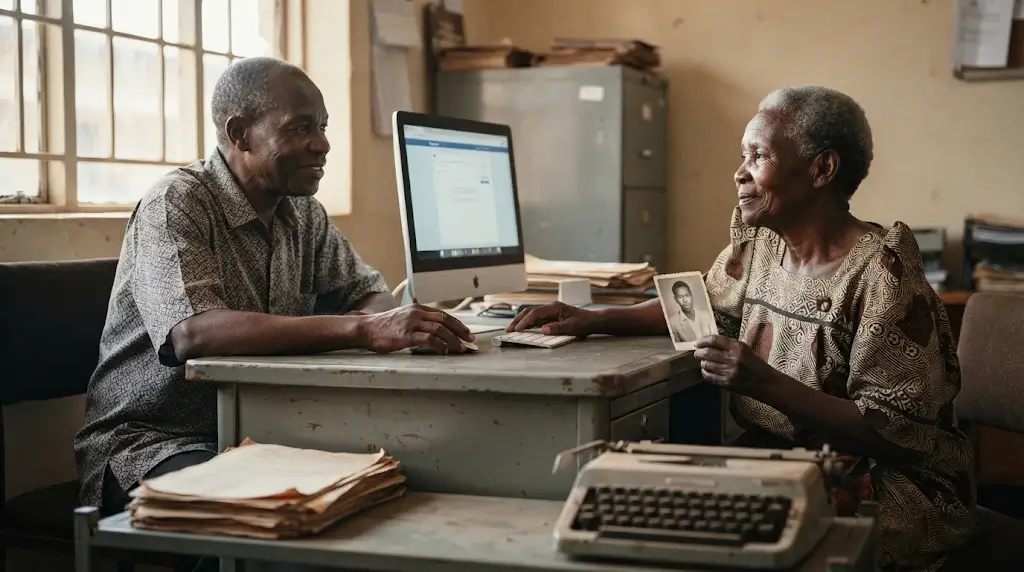
Weeks later, an elderly woman entered the district office. The new digital system had rejected her application for assistance. She stood helplessly, clutching a faded photograph of her late husband.
The machine displayed:
ERROR: INCOMPLETE INFORMATION.
I pulled a chair beside her. She spoke slowly, explaining how illness had taken her husband and how she struggled to feed her grandchildren.
I listened, helped her complete the application and showed her how to use the system.
She held my hand.
“Thank you for hearing me,” she said.
That evening, I understood something my dismissal had hidden from me. Technology had not made my knowledge worthless; it had challenged me to use it differently.
I returned to school, learned digital administration and eventually became a community technology trainer.
Today, I teach people to speak the language of machines. But I always remind my students:
A machine may understand every word we type, yet humanity begins when someone takes the time to listen.
You need to login in order to like this post: click here








Nice article
This is interesting