
You need to login in order to like this post: click here
By Ssegawa Marvin
“Stop behaving like a child.”
It is a statement many of us have heard while growing up. Sometimes it comes when a child is being playful, asking too many questions, expressing emotions or simply behaving in ways adults consider immature.
We tell children to grow up, act mature, behave responsibly and learn to understand things. We admire the child who rarely complains, the one who seems to have everything figured out, the one who can handle situations that would ordinarily require an adult’s understanding.
But have we ever considered the possibility that, in our efforts to raise responsible children, we may sometimes be asking them to abandon parts of childhood they have not yet had the opportunity to experience?
Are we raising children, or are we rushing them into adulthood?
There is a concept worth examining in this conversation: adultification. Although the term is used in different ways across psychological, developmental and safeguarding discussions, it broadly draws attention to situations in which children are perceived, treated or expected to function as though they are older or more mature than they actually are.
It raises an uncomfortable question about the expectations we place on children. When does teaching a child maturity become expecting them to behave like an adult? When does encouraging independence become overlooking their need for care? And when does praising a child’s ability to handle everything become a failure to recognise that they may still need someone to handle things for them?
Perhaps we have become so accustomed to celebrating children who appear mature that we rarely stop to examine what that maturity means.
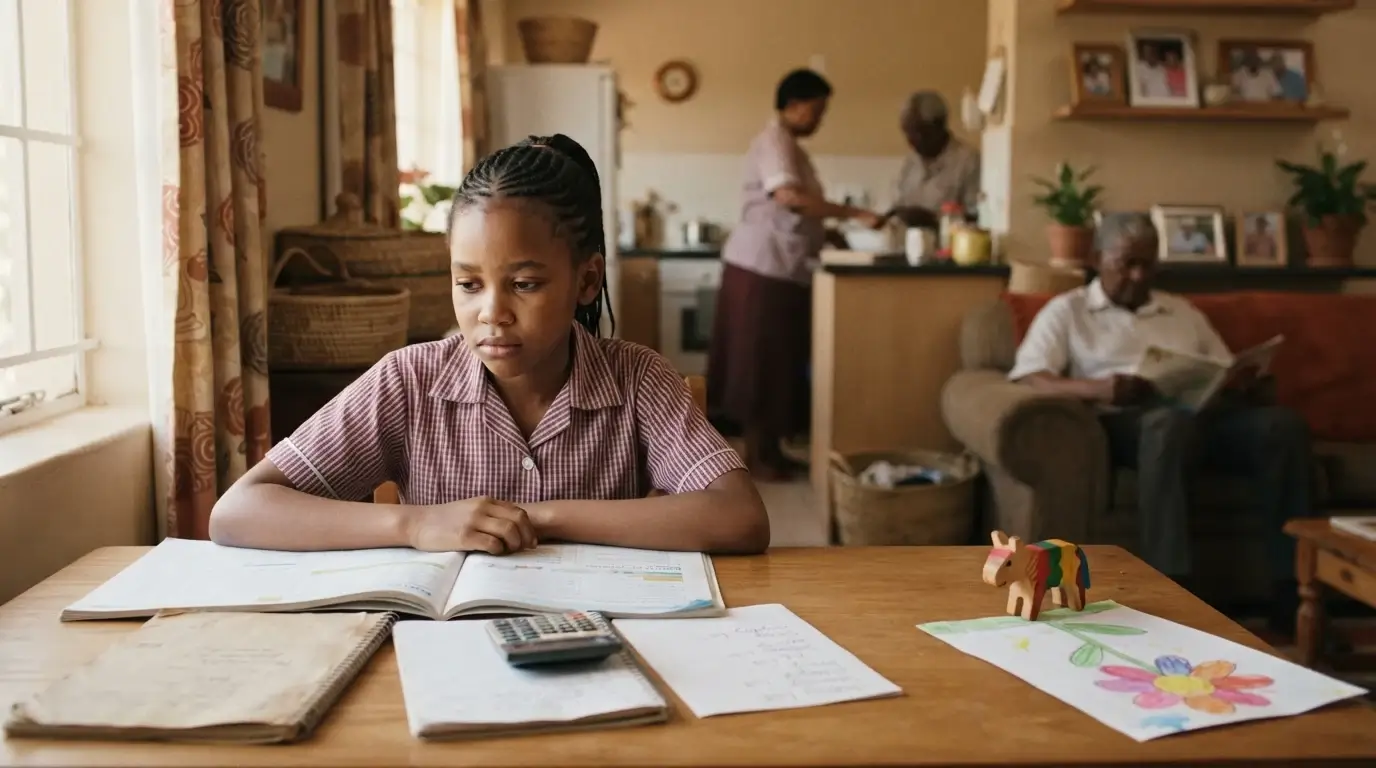
Think about the child who is always described as responsible. The one who understands when adults are having difficulties, rarely asks for anything, takes care of younger siblings and knows when to remain quiet. The child who is always told, “You are mature for your age.”
There is nothing inherently wrong with responsibility, discipline or independence. Children need guidance, boundaries and opportunities to learn how to contribute to their families and communities. But there is a difference between teaching a child responsibility and expecting them to carry responsibilities that exceed their developmental capacity.
Sometimes, we forget that a child can understand a situation without being emotionally equipped to carry it.
A child may know that their family is struggling financially, but that does not mean they should feel responsible for solving the family’s financial difficulties. A child may notice tension between parents, but that does not mean they should become the person responsible for managing adult emotions. A child may help care for younger siblings, but that does not mean their own need for care should disappear.
When children are repeatedly placed in adult-like roles, particularly when they are expected to meet adults’ emotional needs or take on caregiving responsibilities beyond their capacity, this can overlap with what psychologists describe as parentification.
And perhaps this is where we need to become more reflective. We sometimes mistake a child’s ability to adapt to difficult circumstances for evidence that those circumstances are appropriate for them.
But just because a child can carry something does not necessarily mean they should have to.
There is also another side to adultification that deserves attention: the way we perceive children.
We sometimes begin treating a child according to how mature they appear rather than according to the developmental stage they are actually in. Their mistakes receive less patience. Their emotions are taken less seriously. Their need for reassurance is overlooked because they are considered independent.
We expect them to understand, but forget that they are still learning. We expect them to control their emotions, but sometimes give them very little room to express those emotions. We expect them to know better, even when we have not given them enough opportunities to learn.
And what happens when a child begins to internalise these expectations?
Perhaps they learn that crying is childish, asking for help is weakness, making mistakes is unacceptable and needing attention is an inconvenience. Perhaps they begin to believe that being praised, accepted or considered a good child depends on how well they suppress the very behaviours that remind us they are still developing.
Not every child who behaves maturely is experiencing these difficulties, and not every early responsibility is harmful. But we should be careful about assuming that a child who appears composed is necessarily doing well emotionally.
Sometimes, the child everyone describes as strong may simply have learned that showing vulnerability is not welcomed.
And the consequences may not always become visible during childhood.
Consider the adult who finds it difficult to ask for help. The person who feels responsible for everyone, struggles to express their own needs and feels uncomfortable whenever they are not being productive. The person who has become so accustomed to being dependable that they rarely allow themselves to be cared for.
These experiences can have many different causes. They should not automatically be attributed to adultification. However, they invite us to consider how the expectations placed on children can shape the way they understand responsibility, vulnerability and their place in relationships as they grow older.
Perhaps some adults are still learning something they should have been allowed to learn much earlier: that they do not have to be useful all the time to deserve care.
I also wonder whether we have gradually changed what we consider a valuable childhood experience.
Children need opportunities to learn, develop skills and discover their abilities. Education, discipline and structured activities have their place. But must every experience prepare them for adulthood? Must every free moment become an opportunity to improve themselves? Must every mistake become a lesson in responsibility?
What happened to allowing children to explore simply because they are curious? To play without having to achieve anything? To ask questions without being made to feel ignorant? To make age-appropriate mistakes without carrying the shame of having disappointed everyone?
We often speak about preparing children for the future. We want them to become independent, responsible, emotionally intelligent and capable of navigating life. These are worthwhile aspirations.
But in our enthusiasm to prepare them for the adults they will become, are we giving enough attention to the children they are today?
There is a contradiction worth examining. We tell children to enjoy their childhood, yet sometimes become impatient when they display the very behaviours that belong to childhood. We tell them they are too young to make certain decisions, but expect them to demonstrate adult levels of emotional control. We want them to depend on us when it suits our authority, yet sometimes expect them to be independent when their needs become inconvenient.
Perhaps we should reconsider what maturity actually means.
Maturity should not be measured simply by how quietly a child behaves, how little they ask for or how much responsibility they can carry without complaining. A child who expresses emotions is not necessarily immature. A child who needs reassurance is not necessarily weak. A child who makes mistakes is not necessarily irresponsible.
They are growing. And growth takes time.
This is not an argument against discipline, boundaries or teaching children responsibility. It is an invitation to recognise that children have developmental needs that cannot simply be hurried by adult expectations. They need guidance, protection, opportunities to learn and, importantly, the freedom to experience childhood without feeling that they must constantly prove they are mature enough.
Maybe the question is not whether we are raising children to become responsible adults. Of course, we are.
The question is whether, somewhere along the way, we have made adulthood the standard by which we judge childhood.
Because children should not have to stop being children to earn our approval.
And perhaps, before we celebrate another child for being mature beyond their years, we should pause and ask ourselves:
Are we appreciating their maturity, or are we overlooking their childhood?
Are we raising kids too fast?
© Ssegawa Marvin
ABOUT THE AUTHOR
Ssegawa Marvin is a Ugandan writer, author, mental-health advocate and founder of Marvin’s Hope Haven. He is the author of The Hidden Pillars of Becoming. His interests include psychology, human behaviour, personal development and philosophical reflections on the human experience. Through his writing, he seeks to raise meaningful questions about how people understand themselves, relate to others and navigate life.
You need to login in order to like this post: click here